

-
КАК ПОБЕДИТЬ "ОБОРОТНЕЙ" ВО ВЛАСТИ?
Если вас притесняют рейдеры или в отношении вас сфабриковали дело, вам давно пора ознакомиться с нашим алгоритмом победы!
-

ХОТИТЕ ИМЕТЬ СРЕДСТВО МАССОВОЙ ИНФОРМАЦИИ С ЖУРНАЛИСТАМИ?
Создайте на нашей платформе свой информационный ресурс, который идеально поможет в достижении ваших целей!
THE NEW YEAR AROUND THE WORLD: HOW THE PLANET «RESETS» TIME
19 Ноября 2026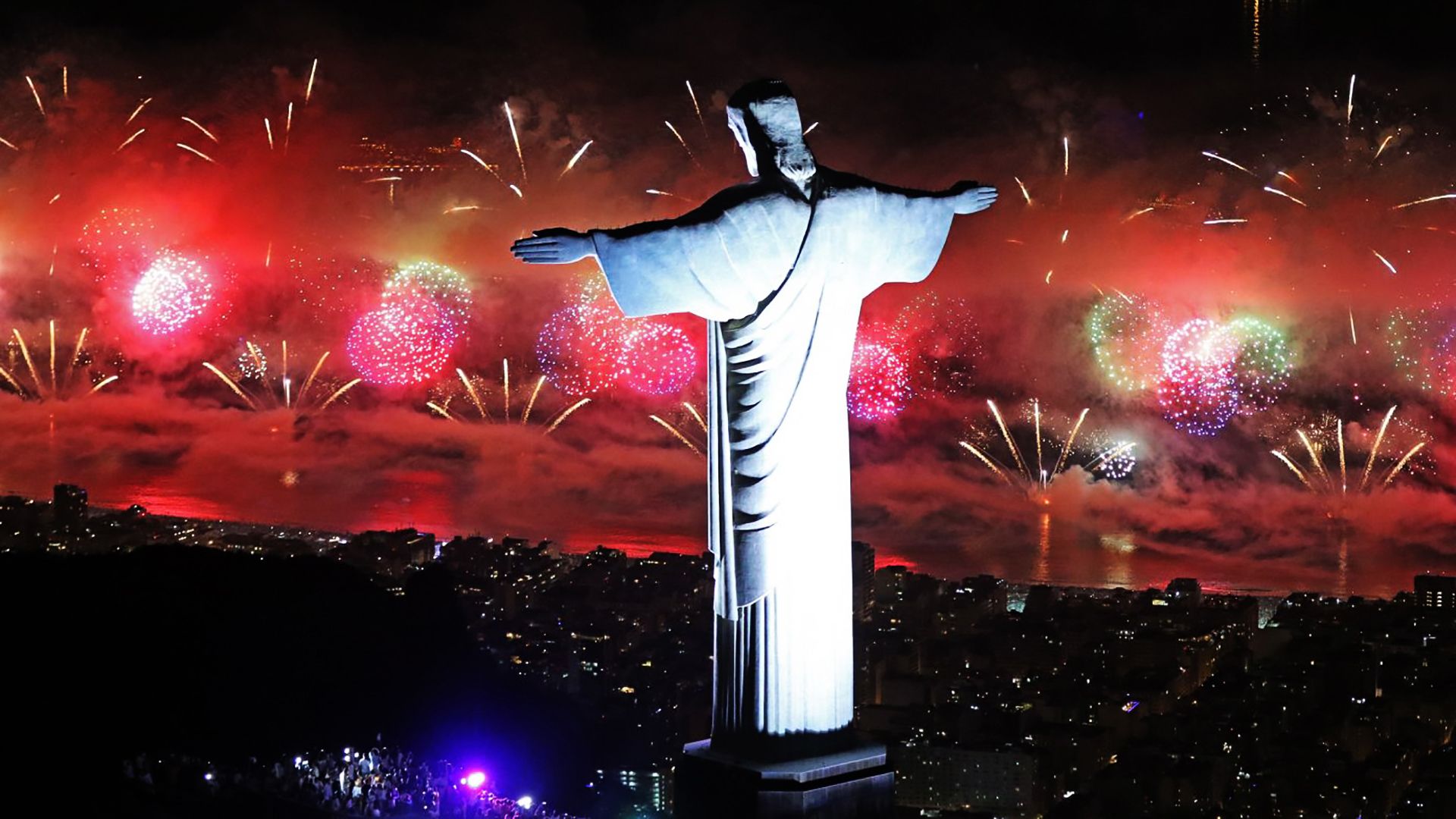
Источник картинки (не коммерческое использование)
The new year is coming. Very soon.
We are counting the days: calendars are burning, boxes with garlands are taking up half the closet, and chat rooms are already arguing about whose greetings matter most. Meanwhile, completely different stories are unfolding across the planet. In some places, this is a celebration for one person. In others, it is a high-risk operation. In others, it is a ritual thousands of years old. And everywhere, midnight is not just a number on a screen.
THE POLAR NIGHT AND OTHER EXTREME «MIDNIGHTS»
At the Russian station «Vostok» in Antarctica, temperatures in December drop to −80 °C. There are no streets, no houses — only modules, generators, and one shared room. When the clock strikes 00:00, people raise mugs of hot tea: there is no electricity for fireworks, and going outside is impossible. This is the most «necessary» New Year: the point is not beauty, but the fact that the team has survived and is still together.
There are other versions. Submariners on autonomous patrols check their ship’s time: for some, midnight is in the Atlantic, for others — in the Pacific. Rescue workers in disaster zones celebrate by generators, next to collapsed buildings. In these cases, the holiday is not about champagne; it is about having reached this moment.
UNEXPECTED RITUALS
In Spain, everything is decided in twelve seconds. Under the chimes, you must eat twelve grapes. One for each beat. A mistake means a year without luck: according to folk beliefs, one uneaten grape means bad luck for the whole year. It looks like a light game, but it ends with half the country choking on sweets at three in the morning.
In Denmark, people do more than say «happy New Year» — they break dishes. Old plates and cups are thrown at friends’ doors. The more shards on the threshold, the happier the coming year. This is a very Danish way of making noise: by 1 January, the streets sometimes hold more ceramics than snow.
In Brazil, the celebration takes place by the ocean. People dress in white (the colour of peace), approach the water, and throw flowers, candles and ribbons into the waves — for the sea goddess Yemanja. There is also another detail: to make the luck work, you must make seven jumps over imaginary waves. On Copacabana Beach, this looks like mass gymnastics before an apocalypse.
In South Korea, for many people the main winter holiday is Seollal, the first day of the lunar calendar. People wear hanboks, bow to their elders, and receive «saltton» (a new year in a bowl of rice and eggs). And 1 January for the youth is just another holiday with parties in cafés. Two systems in one country.
There are even stranger combinations. In Mexico, to ensure success you should wear red (for love), yellow (for money) and white (for purity), and also put a suitcase under your chair. The faster you open it afterwards, the sooner you will travel. In Ethiopia, the New Year (Enkutatash) falls on 11 September: people decorate flowers, sing and hold processions in mountain villages. For them, «December» is just the month before the real holiday.
THE LAST HOUR BEFORE MORNING
In New Zealand, the sun rises first: when it is still dark in London, Auckland is already celebrating. And a few hours later, the same midnight will reach the Azores — and that will be the last point on the map.
In some places, these are fireworks over a megacity. In others, it is silence in a module at the edge of the Earth. In others, it is a broken plate, grapes under the chimes and seven jumps by the ocean.
The New Year is not a date. It is a point where each country decides what matters most: noise, silence, or eleven grapes.
And then comes the first day. Which also has to be survived.
DMITRY DARMODEKHIN
Director of the Interstate Agency
for Special Investigations and Anti-Corruption,
Chief Editor — Criminalist
of «World Community» Magazine,
Vice-Rector of the University of
Natural and Humanities Sciences (Moscow)


Д.С. ДАРМОДЕХИН;
А.А. ГАЯМЯН;
1. Скопируйте ссылку: http://compronet.info
2. В меню вашего браузера Инструменты (Tools) выберите Настройки (Options)
3. В открытом окне, выберите вкладку Основные (General)
4. Вставьте скопированную ссылку в строку Домашняя страница (Home page)
5. Нажмите ОК