

-
КАК ПОБЕДИТЬ "ОБОРОТНЕЙ" ВО ВЛАСТИ?
Если вас притесняют рейдеры или в отношении вас сфабриковали дело, вам давно пора ознакомиться с нашим алгоритмом победы!
-

ХОТИТЕ ИМЕТЬ СРЕДСТВО МАССОВОЙ ИНФОРМАЦИИ С ЖУРНАЛИСТАМИ?
Создайте на нашей платформе свой информационный ресурс, который идеально поможет в достижении ваших целей!
SOVIET INFORMER: “IN THE NAME OF THE NKVD”
19 Сентября 2026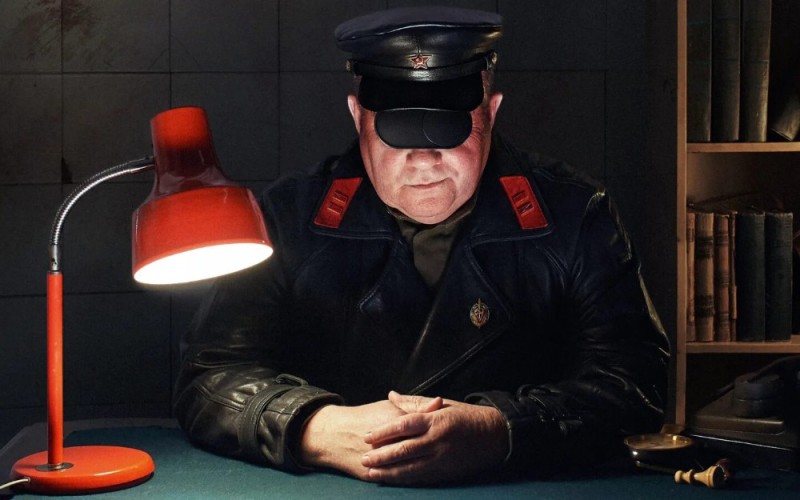
Источник картинки (не коммерческое использование)
The Adyghe aul of Enem was drowning in May greenery when the collective farm chairman Aslan first noticed Saida, the wife of the cattleman Rustam. She was carrying water from the well, and the sun played on her dark shoulders. Aslan, heavy-set, with perpetually sweaty palms, felt a heavy, possessive lust boiling up in him. Saida was not simply beautiful—she was the wife of a man whom Aslan secretly hated. Rustam, young, stately, secretary of the primary Komsomol organization, enjoyed unquestioned respect in the aul. And Aslan was accustomed to having only himself respected.
The thought came to his head at once. Simple and terrible, like the blow of an iron-shod boot. Rustam had to be removed. For a long time. Forever. In the thirties this was simpler than stealing a handful of grain. All that was needed was paper, ink, and one anonymous denunciation.
And Aslan wrote to the Krasnodar NKVD: on May 9, at a ceremonial meeting, when everyone stood up and raised their mugs to Comrade Stalin, the cattleman Rustam remained sitting at the table. He said his legs hurt. His face was sour. Which meant he fiercely hated the Soviet system.
At night they came for Rustam. A black “raven” van stopped noiselessly by the house. Saida woke from a knock at the door. A quiet one, but one that makes the blood run cold. Rustam was dragged out into the street, kicked in the back. He managed to shout only one thing to his wife: “Don’t be afraid! They’ll sort it out!” But she already knew beforehand: they wouldn’t sort it out. As they never sorted anything out.
In the NKVD basement the air was very stale. There was a sharp smell of sweat, makhorka, someone’s excrement, burnt gunpowder, and something else, sweetish-metallic. On the walls were half-erased brown traces. Like silent signs of hell on earth. Rustam was beaten for a very long time. They demanded a confession. At first he was silent, then he screamed, then he stopped screaming. The investigator, a tired man with colorless eyes, methodically repeated: “You are an enemy of the people. Sign, and maybe you’ll survive! And if not, you’ll croak right here!” And Rustam signed. Everything they told him. He had always hated Soviet power. He had dreamed of overthrowing it. He had long been in the opposition. He had maintained contact with Trotsky. And a few days before his arrest he had secretly visited him in Mexico, where he had received the task of preparing the assassination of Comrade Stalin.
The chief of the regional NKVD, Colonel Efimov, having read the confession, felt a sweet anticipation begin to suck at the pit of his stomach. This was not merely a case. It was a gold mine. If it were given to the special troika, everything would end quietly, by the bloody wall in the basement, and would immediately be forgotten. But if a show trial were held? Then he, Colonel Efimov, would enter history as the man who had prevented the assassination of the father of nations himself. A general’s rank, promotion, Moscow… Tempting! And he sent the case to the Prosecutor’s Office of Krasnodar Krai for approval of the indictment.
The prosecutor, Semyon Arkadyevich, a man honest to the depths and principled, of revolutionary tempering, reading the case, could not believe his eyes. A cattleman from the aul of Enem, who in all his life had never traveled farther than the collective farm, had managed to secretly fly to Mexico to Trotsky and return unnoticed? It was so absurd that it smacked of outright delirium. He flatly refused to approve the conclusion and send the case to court.
And then a telephone ring tore the silence of the prosecutor’s office. Efimov shouted into the receiver, breaking into a squeal:
“You’re an enemy! You’re covering spies whom my investigators expose without resting at night! You’re also an enemy of the people! I’ll shoot you personally!”
The prosecutor knew: this was no empty threat. Even tonight they might come for him. And then he, like all the doomed, would face the basement, torture, and a signature under a sentence.
“We’ll see, you zealous steed,” the prosecutor tossed at Efimov. “We’ll see together!”
He put down the receiver, sat for a minute looking out the window at the dusty Krasnodar street. Then quietly, with only his lips, he uttered his favorite phrase, left over from the Civil War:
“So, draw sabers!”
He hid the criminal case in his briefcase and immediately went to the station. A ticket to Moscow. In the compartment he did not sleep, drank strong tea, and thought that if Stalin did not listen to him, then the same fate as the cattleman’s would inevitably await the prosecutor. However, there was no choice.
In Moscow, in the reception room, he sat for six hours. Then he was summoned. Stalin paced the office, smoking a pipe. The prosecutor spoke briefly, without emotion: facts, dates, geography. The cattleman could in no way have crossed the border. Much less secretly visited Mexico. It was not even funny. Stalin listened without interrupting. Then he stopped, looked at the prosecutor with a heavy gaze, and said:
“The case is nonsense. We must sort it out.”
Efimov was removed from his post until the circumstances were clarified. And a week later he left work and did not reach home. He disappeared. Forever. The prosecutor returned to Krasnodar and remained in his post. Rustam was released. He returned home very thin, with gray in his hair. But alive. Saida cried and for a long time could not calm down. The children pressed close to their father.
And a month later Aslan was crushed by a one-and-a-half-ton truck in the collective farm yard. The truck slipped off the jack. Aslan broke his ribs and collarbone, but miraculously survived. Lying in the hospital, he looked at the ceiling and was already preparing in his mind another new denunciation. This time—against the farm manager, who, as he was told, had laughed when she learned of his injuries.
The one-and-a-half-ton truck drove away, leaving a dark oil stain on the ground. Well, and new denunciations continued to be born abundantly. As they say now in Russia, “such were the times…”
Author: Dmitry DARMODEKHIN


Д.С. ДАРМОДЕХИН;
А.А. ГАЯМЯН;
1. Скопируйте ссылку: http://compronet.info
2. В меню вашего браузера Инструменты (Tools) выберите Настройки (Options)
3. В открытом окне, выберите вкладку Основные (General)
4. Вставьте скопированную ссылку в строку Домашняя страница (Home page)
5. Нажмите ОК