

-

КАК ПОБЕДИТЬ "ОБОРОТНЕЙ" ВО ВЛАСТИ?
Если вас притесняют рейдеры или в отношении вас сфабриковали дело, вам давно пора ознакомиться с нашим алгоритмом победы!
-

ХОТИТЕ ИМЕТЬ СРЕДСТВО МАССОВОЙ ИНФОРМАЦИИ С ЖУРНАЛИСТАМИ?
Создайте на нашей платформе свой информационный ресурс, который идеально поможет в достижении ваших целей!
Who Benefits from the Escalation of Tensions in the Middle East
11 Октября 2026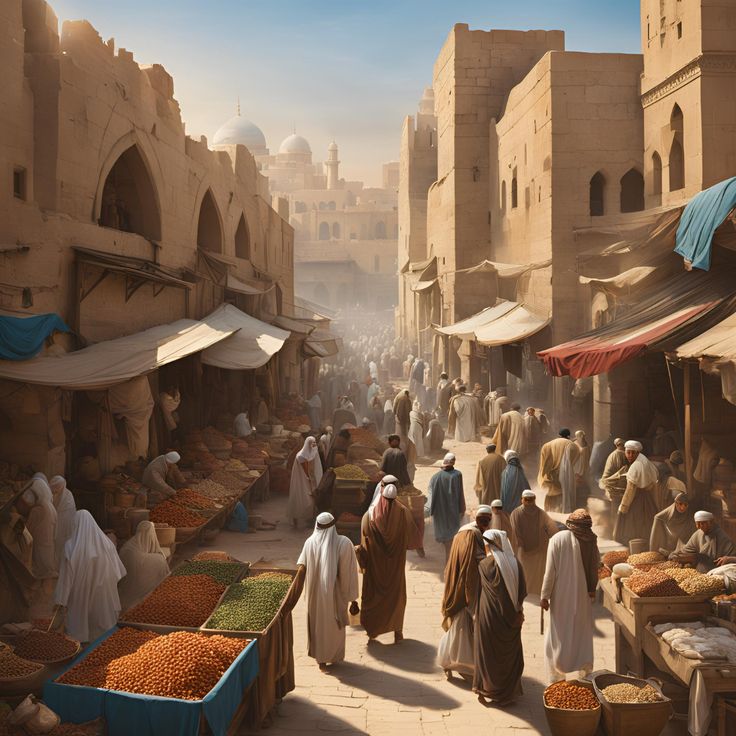
Источник картинки (не коммерческое использование)
An Analytical Article
When, in late February 2026, the United States and Israel delivered a joint strike against Iran, few doubted that the Middle East was entering a new, far more dangerous phase of its history. Several months have passed. What do we see today? Tens of thousands dead, the energy infrastructure of the Persian Gulf in ruins, a slowdown in global growth — and, simultaneously, record profits for some, strengthened strategic positions for others, and a quiet reshaping of the region’s architecture.
Behind the rhetoric of “deterrence” and “preventive security,” concrete, self‑serving interests are often concealed. The current escalation is no exception. But to understand who truly benefits, it is not enough to reduce everything to the “oil lobby” or the “schemes of imperialism.” The picture is more complex — and more alarming.
Washington and Wall Street: War as a Business Model
Let’s start with the obvious. According to the International Monetary Fund (October 2026 forecast), global growth has slowed: the baseline scenario now stands at 3.1 % instead of 3.3 %, with the worst‑case scenario at 2.5 %. The world economy is paying the price for instability in the Middle East. But by no means everyone is paying.
US banks reported their Q1 2026 results: Morgan Stanley posted a net profit of $5.57 billion (+29 %), Goldman Sachs $5.63 billion (+19 %), and JPMorgan $16.49 billion (+13 %). All three banks attribute the growth to “increased trading volumes” and “active client engagement.” Translated from corporate reporting language, this means: instability generates profits for those who know how to capitalize on it. The reports do not record a direct causal link between the conflict and the profits — but the timing is telling.
The real celebration is taking place in the military‑industrial complex. On the day of the first strike against Iran, shares of Lockheed Martin, RTX, and Northrop Grumman rose by 4–6 %, delivering an estimated $25–30 billion in gains to their shareholders in a single day. The five‑year upward trend in defense budgets, which accelerated after 2022, has received a new boost: NATO has pledged to raise military spending to 5 % of GDP by 2035. The MSCI World Aerospace & Defense Index posted an annual return of 32 % by the end of March.
Without waiting for the active phase of hostilities to end, the US State Department approved military supply packages for Gulf states: $16.5 billion for the UAE, Kuwait, and Jordan, and another $7 billion specifically for the Emirates. The logic is simple: the greater the threat, the higher the demand for weapons. The question of how far this threat is being sustained by those who profit from it remains open — there is insufficient direct evidence in the public domain.
A separate story is the emergence of a new class of beneficiaries. The American platform Polymarket, which allows betting on the outcomes of international conflicts, earned more than $21 million in April alone — up from $11.6 million for the entire month of March and $6.2 million in February. Experts estimate that, if the trend continues, annual revenue will reach $342 million. War as a subject of stock‑market gambling is a symptom of the profound commercialization of conflict.
Israel: Tactical Gain Amid Strategic Risk
For Israel, the current escalation is not merely an opportunity to weaken a long‑standing adversary. It is a chance to reshape the regional architecture to its advantage.
Prime Minister Netanyahu’s statement of 19 March is telling. He proposed building oil and gas pipelines across Israeli territory to Mediterranean ports, bypassing the Strait of Hormuz and other “threatened” waters. This is no longer just a reaction to war — it is an attempt to extract long‑term economic benefit from it, transforming Israel into a transit hub for energy from the Persian Gulf. Back in 2025, Israeli arms exports reached a record $19.2 billion (+30 %): every military campaign serves as advertising for Israel’s air defense and missile systems.
The domestic political effect is also evident. According to polls, while only 37 % of Israelis expressed confidence in the country’s future before the war, that figure now stands at around 50 %. The war with Iran has diverted attention from the situation in Gaza, where Israel faces increasingly harsh international legal criticism, and has rallied society around a “strong hand.”
Yet there is a trap here. If the conflict escalates into a protracted war of attrition involving the Arab states of the Gulf, Israel may gain a short‑term advantage but risk strategic isolation. The calculation that it will be possible to “pit” the Arabs against Iran and observe from the sidelines comes at a cost: the Gulf monarchies are already clearly sensing that their interests are being sacrificed. The notion of a “single winner” holds true only in the short term; in the long term, Israel finds itself in a strategic trap.
Russia: A Paradoxical Beneficiary
Russia finds itself in what may, at first glance, seem a contradictory position. On the one hand, Moscow officially condemns the strikes against Iran. On the other, analysts openly point out that a prolonged Middle Eastern conflict objectively benefits Russia.
The mechanism of this benefit is transparent. China is the world’s largest importer of crude oil, and in 2025 it purchased an average of 1.38 million barrels per day from Iran — 13.4 % of China’s total seaborne oil imports. If Iranian supplies are threatened — and they already are, due to the blockade of the Strait of Hormuz — Beijing will be forced to seek alternatives. The obvious answer is Russia. An increase in China’s imports of Russian oil would strengthen Moscow’s international position, giving it additional leverage in its relations with Beijing and partially compensating for the drop in oil revenues from Europe.
Moreover, the closure of the Strait of Hormuz means that not only Iranian but also Saudi, Iraqi, Emirati, and Kuwaiti oil supplies — at least another 25 % of China’s oil imports — are under threat. For Russia, this is a window of opportunity that is unlikely to open again in the foreseeable future. A caveat: this is a potential, not a guaranteed, benefit — it will materialize only if Russia can increase supplies and maintain logistics.
China: Between a Rock and a Hard Place
Unlike Russia, China is by no means an unambiguous beneficiary. Beijing has invested colossal sums in the region — up to an estimated $270 billion — and these investments are now under threat. The Belt and Road Initiative runs through unstable zones, and any prolonged conflict jeopardizes not only capital investments but also strategic transport corridors.
Nevertheless, China and Russia are coordinating their actions on international platforms, including the UN and the SCO, demanding a ceasefire. For Beijing, escalation is primarily a risk, not an opportunity. Yet in the medium term, if Middle Eastern supplies become unreliable, China may accelerate its transition to renewable energy sources and increase imports from Russia — which cannot be called a loss either.
The Quiet Winners: Turkey, Qatar, Pakistan
Another dimension of the current escalation involves countries that have not fired a single shot but have managed to extract diplomatic and economic benefit from the crisis. The US publication The National Interest explicitly names three “quiet winners”: Turkey, Pakistan, and Qatar.
Turkey began to benefit even before the war. After the fall of the Assad regime in December 2024, Turkish officers have been training the new Syrian army, Turkish companies are rebuilding Syria’s energy system and airports, and Turkish advisers are participating in the restructuring of state institutions. Ankara is also acting as a mediator, trying to keep the Gulf states from being drawn directly into the war: Foreign Minister Hakan Fidan made shuttle visits to Riyadh, Abu Dhabi, and Doha, calling for “maximum restraint.” At the same time, Turkey has already established defense‑industrial cooperation with Egypt, Saudi Arabia, and the UAE in the field of drones and ammunition.
Qatar has chosen a different strategy. Since October 2023, Doha has established itself as an indispensable mediator between Hamas and Israel. Even after the Israeli strike on Hamas leadership in Doha in September 2025 — a violation of Qatari sovereignty — the Israeli Prime Minister was forced to apologize. Qatar has become such a vital communication channel that even its opponents cannot afford to ignore it.
Pakistan leveraged its geographic position and personal ties between its military leadership and the Trump administration to become a key mediator. US Vice President Vance spent 20 hours in Islamabad negotiating with Iranian representatives — the longest direct talks between Washington and Tehran since 1979. The result was the August 2026 defense agreement between Pakistan, Turkey, and Saudi Arabia: the “Mecca Pact,” which effectively creates a new regional security system outside traditional structures.
The Split in the Arab World: Who Profits from Disunity
One topic that Western media tend to avoid deserves special attention: the split in the Arab world. Military expert Yuri Dudkin stated bluntly on BELTA: “The existing split in the Arab world benefits various forces and countries. The United States is exploiting this situation. So is Israel itself.”
This is not journalistic exaggeration. The Carnegie analytical center confirms that key players derive direct benefit from the “perpetual wars” in the Middle East. Such conflicts “strengthen political control through constant pressure and generate enormous economic profits for a narrow circle of individuals.”
The Gulf states — Saudi Arabia, the UAE, and Qatar — find themselves in an ambiguous position. They did not want this war, but Iranian strikes on their oil infrastructure and gas facilities have forced them to reconsider their positions. Saudi Arabia granted the Americans access to King Fahd Air Base in Taif — a step that would have been unthinkable a year ago. The UAE began freezing assets linked to the Islamic Revolutionary Guard Corps, closing medical and social institutions in Dubai.
At the same time, according to the Turkish Foreign Ministry, the Gulf states have issued “final warnings” to Iran, stating that they “will be forced to take countermeasures” if the attacks continue. The Arab monarchies are being drawn deeper into a conflict that was not originally their war. And this very втягивание of the Arabs into confrontation with Iran is the strategic goal of those who benefit most from the escalation.
Who Loses from Escalation
To complete the picture, it is worth identifying the losers. The global economy as a whole: slowing growth, inflationary pressure, rising energy and logistics costs. Developing countries without their own resource base: for them, higher oil and food prices are a direct blow to budgets and living standards. The Gulf states: their infrastructure is becoming hostage to someone else’s conflict, and investment attractiveness is declining. Iran: a shattered economy, losses in military and scientific potential, and isolation. Finally, Israel — in the long term, if the conflict drags on and leads to regional isolation.
Why, then, is the conflict not being stopped if it benefits only a few players? Because the benefits are concentrated, while the costs are distributed. Those who profit are organized and motivated; those who pay are fragmented and lack direct access to levers of influence. This is a classic collective‑action problem — and it explains the persistence of “perpetual wars” no less convincingly than conspiracy theories.
In Lieu of a Conclusion: War as a System
I have been observing Middle Eastern conflicts for a long time. And each time I am struck by the same thing: the longer a war lasts, the fewer there are who would want to end it — because too many have begun to profit from it.
The picture that emerges today is bleak. US banks and defense corporations are posting record profits. Israel is trying to consolidate its military superiority and turn it into economic dividends — but risks strategic isolation. Russia gains leverage over China through energy. Turkey and Qatar are expanding their diplomatic weight. The Gulf states are losing ground. Ordinary people around the planet are paying the price.
Carnegie analysts are right: “perpetual wars” have become not a byproduct of geopolitics but its engine. As long as a powerful industry has a vested interest in conflicts, as long as financial markets know how to extract profit from instability, and as long as political leaders know how to divert public attention from domestic problems with external threats, the Middle East will remain a zone of permanent turbulence.
The question “Who benefits from escalation?” has too many answers. But perhaps the most honest one is this: those who realized long ago that peace is bad for business. There is, however, a flip side to this formula: war is also a poor strategy. The benefits are short‑term; the costs are systemic; and in the end, the winners find themselves in the same turbulence zone as everyone else.
Ruslan Chumakov
Special Crime Editor,
The World Community


Д.С. ДАРМОДЕХИН;
А.А. ГАЯМЯН;
1. Скопируйте ссылку: http://compronet.info
2. В меню вашего браузера Инструменты (Tools) выберите Настройки (Options)
3. В открытом окне, выберите вкладку Основные (General)
4. Вставьте скопированную ссылку в строку Домашняя страница (Home page)
5. Нажмите ОК